







大型科研機構
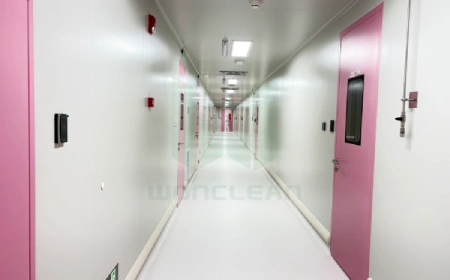
多用戶、多學科研究環境的潔淨室設備工程
1. Project Overview
A large scientific research institute—comprising multiple departments such as molecular biology, nanotechnology, advanced materials, and pharmaceutical sciences—initiated a major infrastructure upgrade to centralize its high‑containment and high‑sensitivity research capabilities. The institute required a flexible, scalable cleanroom facility capable of supporting diverse research activities ranging from cell culture and viral vector production to nanofabrication and analytical chemistry.
Unlike a single‑owner pharmaceutical company, the institute hosts dozens of independent research groups, each with varying cleanliness, safety, and equipment requirements. The primary challenge was to design a shared cleanroom equipment ecosystem that could serve multiple users without cross‑interference, while maintaining compliance with institutional biosafety levels (BSL‑2 and BSL‑3) and ISO 14644 standards.
2. Client Requirements
-
Multi‑User Flexibility: Cleanroom zones that can be reconfigured for different research protocols (e.g., sterile cell work one week, nanoparticle synthesis the next).
-
Segregated Containment: Isolated modules for BSL‑2, BSL‑3, and low‑humidity nanofabrication processes, each with dedicated HVAC and airlock systems.
-
高可靠性和; 正常運行時間: ; 全天候運行,配備冗餘潔淨室設備,避免研究停機。
-
Energy Efficiency: Given the large footprint (3,500 m²), the institute demanded low‑energy cleanroom HVAC and filtration solutions.
-
培訓與; 可訪問性: Equipment interfaces designed for easy operation by rotating students, postdocs, and visiting scientists.
3. Cleanroom Equipment Engineering Solution
我們的工程團隊交付了;centralized cleanroom equipment package tailored to a multi‑tenant research environment:
A. Zoned HVAC and Filtration
-
Dedicated AHU per cleanroom class: Separate air handling units for ISO Class 5, Class 6, and Class 7 zones.
-
HEPA/ULPA filter banks: Ceiling‑mounted filter modules with adjustable airflow for research‑grade unidirectional or non‑unidirectional patterns.
-
Low‑velocity displacement ventilation in low‑turbulence zones (e.g., for electron microscopy prep).
B. Modular Cleanroom Architecture
-
Demountable hardwall panels: Allow reconfiguration of lab layouts without structural modifications.
-
顏色編碼的模組化牆: ; 清潔度等級的視覺區分(例如,白色=ISO 7, 藍色=ISO 6, 黃色=BSL-3)。
-
聯鎖直通式高壓滅菌器和化學浸漬罐: ; 用於安全殼層之間的資料轉移。
C. Shared Containment and Process Equipment
-
多個類 II類型 A2生物安全櫃(BSC): ; 每個都配備了單獨的監測裝置,但連接到一個共用的排氣增壓室。
-
Portable glovebox isolators: For oxygen/moisture‑sensitive materials research.
-
Centralized vacuum and gas systems: ; 通過不銹鋼歧管分配的超高純氮氣、氬氣和清潔乾燥空氣。
D.中央監測和; 存取控制
-
Room‑by‑room EMS/BMS: Real‑time pressure, particle count, temp, RH, and door interlock status.
-
基於RFID的訪問系統: ; 將用戶限制在授權的潔淨室類別,並記錄使用情况以進行計費/問責。
-
Visual alarm beacons at each entry for rapid pressure‑cascade failure notification.
4.關鍵工程挑戰和; 解決方案
| Challenge | Solution |
|---|---|
| Preventing cross‑contamination between BSL‑2 and BSL‑3 zones | Physical separation + cascading negative pressure (−25 Pa to −50 Pa) + dedicated BIBO filter housings |
| Supporting high‑heat equipment (furnaces, reactors) inside cleanrooms | Local exhaust connections + water‑cooled equipment enclosures + supplementary chilled beams |
| User‑induced contamination (multiple researchers per day) | Mandatory gowning rooms with air showers + sticky mats at each entrance + routine ATP surface testing |
| Vibration from nearby foot traffic affecting sensitive tools | Isolated concrete inertia blocks for AFM, TEM, and microbalances |
5. Validation & Compliance
所有潔淨室設備均符合;ISO 14644‑1:2015 ; 以及機构生物安全要求:
-
DQ: Simulated multi‑user scenarios (e.g., simultaneous cell culture and nanoparticle synthesis).
-
IQ: ; 經過驗證的公用設施連接、篩檢程式認證和設備安裝。
-
OQ: Tested air change rates (20–60 ACH depending on class), pressure cascades, and recovery time (<15 min to ISO Class 5).
-
PQ: Three months of dynamic monitoring with actual research protocols, including microbial air sampling.
結果: ; 該機构獲得了全面的運營認證;zero cross‑contamination events during the validation period.
6. Project Outcome
-
潔淨室面積: ; 3,500 m²; (ISO 5: 400 m²; , ISO 6: 1,200 m²; , ISO 7: 1,900 m²;)
-
User Capacity: Up to 150 researchers per day across 28 independent lab modules
-
Energy Savings: ; 通過變速風扇和按需控制通風,暖通空調能耗降低32%
-
利用率: >85% within six months of opening, accommodating 12 research groups from 4 faculties
The research institute now operates a 真正共亯的高性能潔淨室覈心設施,使以前由於污染或遏制衝突而無法實現的跨學科項目成為可能。
7.結論
For large scientific research institutes, cleanroom equipment engineering must prioritize flexibility, segregation, and user‑centric design far more than in a dedicated pharmaceutical facility. This project demonstrates that with zoned HVAC, modular hardwall architecture, and centralized monitoring, a single cleanroom complex can safely serve hundreds of researchers across BSL‑2, BSL‑3, and nanofabrication disciplines—while maintaining ISO Class 5 integrity and energy efficiency.